
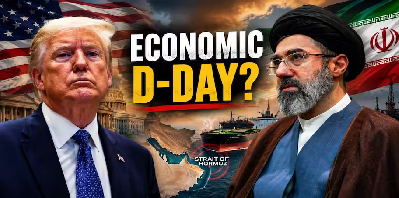

US Treasury Secretary Scott Bessent has declared an “economic D-Day” against Iran, saying Washington will use its full economic powers to cut Tehran’s remaining lifelines. Iran has responded with a threat to halt oil exports through the Persian Gulf and the Strait of Hormuz if the US campaign continues.
US says Iran campaign is entering the endgame
Bessent said the Trump administration is moving into what he called the “endgame” of its campaign against Iran. He said the US would use every available agency and authority to increase pressure on Tehran.
In a post on X, Bessent said, “President Trump has dismantled Iran’s military capabilities, destroyed nearly 100 percent of its military factories, and buried its nuclear program.”
He added, “We are now entering the endgame. At dawn begins an economic D-Day — the single greatest financial offensive ever marshaled against an adversary.”
He said the goal was to cut the economic links that continue to support Iran and leave Tehran isolated. The planned measures are expected to target Iran’s trade partners and other entities that help maintain its economic links with the outside world.
Bessent also credited President Donald Trump with creating the conditions for Washington to use wider economic powers against Iran. He repeated the administration’s claims that US military action has severely damaged Iran’s military and nuclear capabilities.
“Our objective is to sever every economic lifeline that sustains the tyrannical regime until Tehran stands alone,”
Iran threatens to halt oil exports
Iran has responded with a direct warning over the impact of the US economic campaign. Mohsen Rezaei, secretary of Iran’s Supreme National Security Council, said Tehran could stop all oil exports from the Persian Gulf if US economic pressure continues.
“If the economic war continues, not a single drop of oil will be exported. neither through the Strait of Hormuz nor from anywhere in the Persian Gulf. Iran will regard any country’s participation in or support for America’s economic war against the Iranian people as an act of war,” Rezaei said.
The warning raises the risk of further disruption to global energy supplies because the Strait of Hormuz is a major route for oil shipments. Reuters reported that Iran has threatened to shut down Gulf oil exports if the economic pressure continues.
Iran pushes back against new sanctions
Iranian officials have rejected Washington’s pressure campaign. Foreign Minister Abbas Araqchi said the threatened sanctions showed US desperation and argued that they would not defeat Tehran. Iranian officials have also stressed that the country has lived under sanctions for decades.
Parliament Speaker Mohammad Bagher Ghalibaf used sarcasm to criticise the US approach, arguing that economic pressure could worsen problems rather than solve them.
“Importing frozen meat to fix meat prices. Okay, that might work. What’s the plan for bonds, import frozen yields? Frozen homebuyers for housing? Frozen paychecks for wages? A frozen foreign policy delivers a frozen economy. The only thing still moving? The Iran boomerang,” he said.
Washington prepares new sanctions
The US is expected to announce further measures on Monday. Bessent has promised what he described as the toughest sanctions in US history, while Washington has urged other countries to join its effort to isolate Iran economically.
The planned campaign could put additional pressure on countries and companies that continue to trade with Iran. The move marks a further escalation in the US-Iran confrontation and comes as Tehran faces pressure over its economy and oil exports.
Global oil markets face fresh risks
The dispute could severely impact energy markets, as any major disruption to Persian Gulf oil shipments would threaten global supplies, spike prices, and hurt import-dependent economies.