
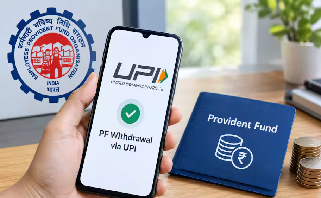

The Employees’ Provident Fund Organisation (EPFO) has begun testing Unified Payments Interface (UPI)-based withdrawals from provident fund accounts. The facility is said to be rolled out formally by the end of December.
According to a report by Moneycontrol, the testing began in collaboration with banks and would enable users to withdraw funds directly through UPI.
The new feature would link the UAN portal with the UPI accounts of subscribers, which would help them directly access their funds without needing to apply through the portal. The current process of PF withdrawal includes completing the claim process online through the portal, following which the EPFO transfers the amount to the respective bank account.
Also, the report suggests another development by the EPFO, which includes an app linked to subscribers’ accounts, as well as BHIM and other UPI apps.
The latest UPI feature would not, however, change or remove the conditions related to withdrawals. As per the current rules, members may withdraw up to 75 per cent of the total corpus, subject to applicable conditions. The EPFO has also specified the categories of needs for which withdrawals can be made, such as marriage, education, and house-related expenses.
The remaining 25 per cent must stay in the account to ensure the continuity of the long-term investment, which would continue to earn interest.
Government data reveals that there are 55.49 crore (over 550 million) registered UPI users, indicating the growing reliance of people on UPI for transactions. On the other hand, there are around 30 crore EPFO subscribers and around 8 crore contributing members. Integrating UPI with EPFO withdrawals would facilitate a smoother withdrawal process for many subscribers who may already be active UPI users.
What’s new with EPFO and UPI
Since last month, the EPFO has raised the wage ceiling to Rs 25,000 from Rs 15,000. The move would bring more people under social security coverage.
Employees and employers each contribute 12 per cent of the employee’s basic wage towards the provident fund. The previous wage ceiling meant a contribution of Rs 1,800 from each, which has now gone up by Rs 1,200 to Rs 3,000.
On the other hand, select UPI transactions would include Merchant Discount Rates (MDR) from October 15, 2026. The revisions have been introduced by the National Payments Corporation of India (NPCI) and would not apply to person-to-person (P2P) payments. Consumers will continue to use UPI without paying any transaction charges.
For everyday UPI transactions from person to merchant (P2M), an MDR of 0.4 per cent will apply to payments above Rs 2,000. Thus, transactions of up to Rs 2,000 will also remain outside the MDR framework.
Also, transactions covered under the zero-MDR framework for small merchants will remain free. This covers vendors receiving up to Rs 1 lakh per month through UPI QR payments directly into their bank accounts.