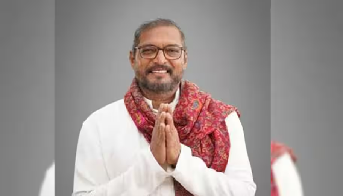

Nana Patekar did not speak about death like most actors do. There was no attempt to make it sound poetic or mysterious. He treated it with the same bluntness that came through in his conversations about politicians, farmers and his own life.
In an old interview, he had said, “Jab nikalna hai, nikalna hai (when it is time to leave, you leave).” The words have taken on a different meaning after the legedary actor died in Goa on Thursday (October 8) at the age of 75.
There is another detail from his final hours that gives that old sentence a different weight.
At around 2.30 am on Thursday, he sent a message to a friend saying he was unwell. The friend did not see it immediately. He reached Patekar’s Goa home around 4 am and found him sweating and gasping. He was rushed to Manipal Hospital, where doctors tried to revive him for 45 minutes. He was declared brought dead at 5.20 am. His son Malhar confirmed his death.
The circumstances were painfully ordinary. A late-night message. A friend rushing over. A hospital. Attempts to save him. Then death.
That sits oddly beside the image of Nana Patekar that cinema created.
He was an actor who could make anger sound physical. His voice could dominate a scene without needing a crowd around him. His characters dealt with violence, anger, fear and moral conflict. Away from movies, he had little interest in maintaining the polished image normally expected of a film star.
His relationship with death was part of that refusal to dress things up.
He had also once made another blunt comment about death. He had even thought about his own funeral in his own irreverent way. He said he kept dry wood ready for the day he would be cremated. He joked that wet wood would create smoke and make people cry for the wrong reason.
That dark humour was very much in keeping with the man who once told farmers not to sit around waiting for governments to fix their lives.
In March 2024, at a farmers’ gathering in Nashik, Patekar told the peasants, “You should not wait for good times, but you should bring in good times through tenacity. You should decide which government will come to power.”
He also said, “I can’t join politics, because I am an outspoken person.”
He had good reason to know what political power looked like from close range. Patekar had friendships across Maharashtra’s political divisions. He was close to Sharad Pawar, had interacted with Uddhav Thackeray and Raj Thackeray and maintained ties with Eknath Shinde and Devendra Fadnavis. He never turned those relationships into an electoral career.
In 2022, he demonstrated why.
At an event featuring former Chief Minister Shinde and Chief Minister Fadnavis, Patekar asked why a corporator could earn crores after getting elected when former Maharashtra Chief Minister Y B Chavan had only Rs 25,000 in his bank account when he died. He also asked politicians, “You politicians will join hands again, but what about families that get divided because of you?”
His refusal to enter politics was not because he avoided public issues. He did almost the opposite.
His intervention in the lives of farmers began with a television programme in 2015. He later recalled that he had saved Rs 1.5 crore to buy a luxury car when he watched an interview with the family of a farmer who had died by suicide. He said what disturbed him was the hunger he could see in the family’s eyes. He abandoned the car plan and decided to give Rs 15,000 each to 1,000 farmers. That effort eventually became the Naam Foundation with actor Makarand Anaspure.
The foundation says it was started in September 2015 in response to drought, farmer suicides and water shortages in Maharashtra.
The scale eventually became much larger than the original plan. The Indian Express reported on Thursday that the foundation had helped more than 77 lakh farmers, 51,000 disaster-relief families and nearly 5,000 widows.
That makes the final image of Patekar less about a film star disappearing from the screen and more about a man who had spent years talking about what happens after the applause ends.
He had once saved money for a car. He ended up putting much of that purpose into people he had never met. He had friends in politics, but he refused to become a politician.
He played men who could fill a room with their voice. Away from the camera, he preferred a farm, animals, farming and a life that he once described in simple terms.
And he had described death without giving it a grand meaning. “Jab nikalna hai nikalna hai.” On Thursday morning, Nana Patekar’s own words acquired their final context.