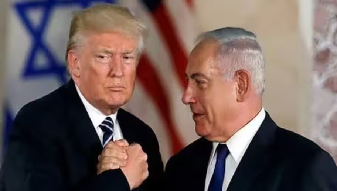

US Defence Secretary Pete Hegseth held a private meeting with Israeli Prime Minister Benjamin Netanyahu during an unannounced visit to Israel this week, Axios reported, citing sources familiar with the matter. Neither the Israeli government nor the US administration has commented on the reported meeting, which came after US President Donald Trump endorsed Netanyahu ahead of Israel’s parliamentary election scheduled for next week.
The election will be Israel’s first since the October 7, 2023, Hamas attack, which shocked the country and triggered turmoil across the Middle East as Israel launched military campaigns in Gaza, Lebanon and Iran.
Opinion polls indicate that Netanyahu’s religious-nationalist coalition could lose its majority in parliament, while opposition parties may also face difficulties in securing enough support to form a government.
Sanam Vakil, director of the Middle East and North Africa programme at the British think tank Chatham House, said Trump’s endorsement of Netanyahu was “politically significant”, particularly as it followed months of tensions between the two leaders.
“It allows Netanyahu to reinforce his claim that he is indispensable to Israel’s relationship with Washington,” Vakil told Al Jazeera.
“However, its electoral impact should not be overstated. Israeli voters remain divided over Netanyahu’s leadership and the outcome of the Iran war. The endorsement may help consolidate his existing support, but it does not resolve the wider questions surrounding his record,” she added.
Analysts also say Trump’s endorsement of Netanyahu has largely centred on the war with Iran, particularly amid speculation that the US president could seek to resume military strikes either before or after the midterm elections in early November. Several US media reports have suggested that the Pentagon may be preparing to launch fresh attacks before voters go to the polls.
Trump’s backing of Netanyahu signals a renewed political alignment between Washington and Israel, which Vakil said could pave the way for further joint military action. She warned that this could make it “harder for Trump to distance himself from the war or portray the US as having been reluctantly drawn into it.”
“He is explicitly taking ownership of the partnership and its military campaign against Iran. However, the endorsement does not necessarily mean that the two leaders have agreed on another operation, nor does it settle the question of who initially pushed hardest for war,” she said.
Vakil added that Trump’s remarks would strengthen Tehran’s perception that Iranian leaders see “little meaningful distinction between US and Israeli objectives.”
She also noted that Trump’s indication that he was reluctant to confront Iran without Netanyahu could be viewed as a sign that Washington has limited appetite for engaging in another war.
Vance maintains distance
Meanwhile, US Vice President JD Vance, who has openly accused Netanyahu of pulling the United States into the war, refrained from endorsing the Israeli prime minister in an interview on Monday. Vance said he did not intend to get involved in Israel’s elections.
“I endorse American candidates, and that’s where I’m focused on is the midterms,” Vance said.