
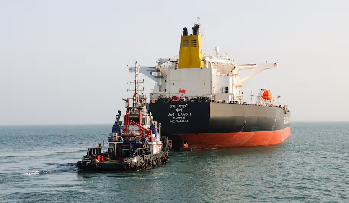

India accounted for 60 percent of the diesel transiting through Bab-el-Mandeb to Europe in August, as per the report from energy intelligence firm Vortexa. India has established itself as a significant supplier amid restricted Russian exports and weakening US shipments.
The strategically important shipping route halted the passage of vessel amid the Middle East crisis in March and April. However, the volume bounced back nearly to the previous year’s level with 2,00,000 barrel per day of diesel being transitted through Bab-el-Mandeb in August. A significant portion out of this was exported from India owing to its extensive refining capacity.
The recent figure highlights India’s importance to Europe’s eastern diesel supply. Being the fourth largest oil refiner in the world the country’s refining capacity is higher than the domestic fuel demand. India refines 258.1 million tonnes crude oil per year.
India has emerged as a major exporter as geopolitical tensions, sanctions, refinery disruptions, and changing global trade routes are reshaping the flow of refined products. During 2025-2026 the country has been one of the largest exporter of refined fuel with a total export of 61.5 million tonnes petroleum products. These products are now landing significantly in European and Russian market.
However, the import of crude oil in India has experienced a low for a second consecutive month in August. Crude and condensate shipments dropped from 4.8 million bpd a year earlier to around 3.8 million bpd. Therefore, sustainability of India’s continued supply of refined products becomes dubious.
Moreover, the situation may become increasingly tensed for Europe since its major supplier Russia’s export has drastically reduced. The average export of Russia’s seaborne diesel and gasoil was around 1,50,000 bpd during the first 25 days of August, down by about 6,10,000 bpd from a year earlier. Also, it is 81 percent below the five-year seasonal average, Vortexa states.
Ukraine has launched 32 attacks on refineries during July and August and as a result of these continued attacks, the Russian refineries and export infrastructure is severely disrupted. Even the lifting or partial relaxation of Russia’s diesel export restrictions from September 1 may not result in an immediate recovery in supplies.