
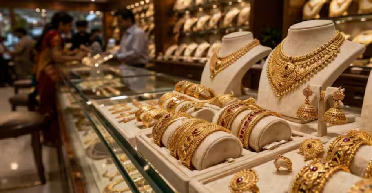

Gold jewellery hallmarking has become costlier just before the festive and wedding season. The Bureau of Indian Standards (BIS) has its fee from Rs 45 to Rs 75 per article, an increase of 66.7 per cent.
The new rate took effect on September 14 after the BIS notified the Bureau of Indian Standards (Hallmarking) Amendment Regulations, 2026. The minimum charge for a gold consignment continues at Rs 200. The fee for silver articles has not changed and continues at Rs 35 per article, with a minimum consignment charge of Rs 150.
The change comes before the festive buying season, when demand for gold jewellery usually rises. It has also led to questions among buyers about whether the higher hallmarking cost will directly increase the price they pay at a jewellery store.
The answer depends on how jewellers account for the additional cost.
Under the revised fee structure, jewellers have to pay Rs 75 for hallmarking each gold article submitted to a recognised Assaying and Hallmarking Centre. The earlier charge was Rs 45.
This means the cost has gone up by Rs 30 per article. In percentage terms, the increase is about 66.7 per cent.
The minimum gold consignment charge continues to be Rs 200. This means the per-article calculation does not apply below that minimum level for a consignment.
For silver, there is no change. Jewellers will continue to pay Rs 35 per article, with a minimum consignment charge of Rs 150.
Will buyers have to pay Rs 30 more?
The fee revision does not mean that a customer has to pay an additional Rs 30 for every gold jewellery item.
The Rs 75 is the hallmarking fee payable by the jeweller to the recognised hallmarking centre. It is not a separate Rs 75 charge that the BIS has ordered jewellers to collect from customers on every gold article.
The actual impact on a buyer depends on how the jeweller accounts for the higher cost while setting the final price of the jewellery. If the additional hallmarking expense is included in the jewellery’s overall pricing, the customer could see a hike in the final bill.
This is relevant for lightweight and lower-value gold jewellery, where a flat per-article cost makes up a larger share of the overall price.
The All India Gem and Jewellery Domestic Council (GJC) has asked the BIS to review the increase. The industry body has said the higher flat fee could have a larger effect on lightweight and lower-value ornaments.
What does hallmarking actually do?
Hallmarking is the BIS system used to certify the purity of precious-metal articles. For hallmarked gold jewellery, buyers can check the BIS standard mark, the purity or fineness indication and the six-digit Hallmark Unique Identification (HUID) number.
The BIS says hallmarking charges are calculated per article and not according to the weight of the jewellery. The bureau also advises consumers to take an authentic bill or invoice from the jeweller.
The HUID number can also be checked through the BIS Care app using its “Verify HUID” feature. This allows buyers to verify the details of a hallmarked gold article before completing a purchase.
What changes for silver jewellery?
There is no change in the hallmarking fee for silver articles.
The charge continues at Rs 35 per article, while the minimum charge for a silver consignment stays at Rs 150. The September 14 notification specifically keeps these rates unchanged while raising the gold article fee.
Why gold buyers should know about the fee hike
The revised charges have come just before the festive buying period, followed by the wedding season. Gold jewellery purchases generally pick up during this period, making the new hallmarking cost relevant for jewellers and buyers.
The hallmarking cost paid by jewellers has increased by Rs 30 for each gold article. The final impact on consumers will depend on how individual jewellers account for that extra expense in their pricing.
Customers should check the final invoice carefully. It should clearly list the gold price, making charges, taxes and any other fees. The BIS fee hike does not mean that a fixed Rs 30 has been added to every piece.
The revised BIS fee therefore changes the cost of getting gold articles hallmarked, while the amount ultimately paid by a customer will depend on the jeweller’s pricing and billing.