
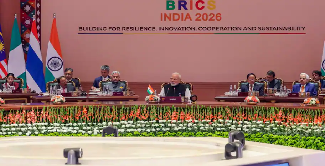

BRICS nations have backed a rules-based global trading system and voiced serious concern over the growing use of unilateral tariffs and non-tariff measures, saying such steps distort trade and are inconsistent with World Trade Organisation (WTO) rules.
The bloc unanimously adopted the New Delhi Declaration on Saturday, reaffirming its support for WTO reform and a multilateral trading system that is open, fair, transparent, inclusive and predictable, with the WTO at its core.
The declaration said BRICS remains committed to strengthening a “non-discriminatory, open, equitable, transparent, fair, inclusive, predictable and rules-based multilateral trading system, with the WTO at its core”.
Reflecting the aspirations of the Global South to play a greater role in global trade, BRICS also backed Ethiopia and Iran’s bids to join the WTO. The declaration acknowledged China’s decision to expand zero-tariff treatment to 53 African countries with which it has diplomatic ties.
The bloc also condemned unilateral coercive measures that it said are contrary to international law. It called for the removal of such measures, including unilateral economic and secondary sanctions.
According to the declaration, such sanctions can have far-reaching consequences for human rights, including access to development, healthcare and food security. It said the impact is often felt disproportionately by poorer and vulnerable populations, while such measures can also deepen the digital divide and worsen environmental challenges.
The BRICS countries called for the elimination of these measures, describing them as unlawful.
The declaration also highlighted the growing contribution of emerging market and developing economies (EMDEs) to global output and growth. Reforming global economic governance, it said, remains a key priority for the bloc.
BRICS members agreed to strengthen coordination to push for greater representation of developing countries in international financial institutions, including the International Monetary Fund (IMF) and the World Bank.
The bloc called for a strong, quota-based and adequately resourced IMF to remain at the centre of the global financial safety net, particularly to support countries facing greater economic vulnerability.
“We urge entry into effect of the quota increases agreed under the 16th General Review of Quotas (GRQ) with no further delay and call for the development of approaches to meaningful quota realignment under the 17th GRQ at the earliest,” the declaration stated.
BRICS also reaffirmed the importance of the 2025 World Bank Shareholding Review, describing it as a key step towards strengthening multilateralism and improving the legitimacy of the World Bank Group as a “better, bigger, and more effective development finance institution”.
The bloc said it would continue to push for a greater voice and stronger representation for developing countries, backed by changes to shareholding that address their historic underrepresentation in global financial institutions.