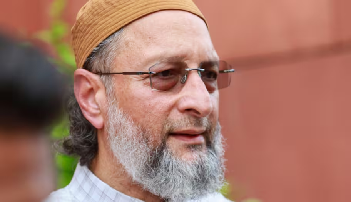

AIMIM President and Hyderabad MP Asaduddin Owaisi moved the Supreme Court of India on Wednesday to challenge the Election Commission’s (EC) Special Intensive Revision (SIR) of electoral rolls. The petition joins a batch of legal challenges filed by opposition leaders, including Leader of Opposition in the Lok Sabha Rahul Gandhi and Congress President Mallikarjun Kharge, alleging procedural irregularities and demanding judicial oversight over voter deletions.
The collective opposition petition seeks the constitution of a committee headed by a retired Supreme Court judge to investigate the implementation of the SIR exercise, alongside an independent technical audit of the ECINET and ERONET voter databases.
Petitioners questioned the unilateral exercise of authority by the Chief Election Commissioner (CEC), arguing that major decisions concerning electoral rolls must operate under a multi-member constitutional framework pursuant to Article 324 and the Chief Election Commissioner Act, 2023.
Key procedural concerns raised in the petition include:
Modifications to online Form 6: Concerns over new requirements on the ECINET platform mandating applicants to declare presence in earlier SIR rolls without corresponding statutory rule amendments.
Lack of transparency in deletions: Demands for the publication of booth-wise details and explicit reasons for each voter deletion, ensuring due process before removal.
Bulk Form 7 objections: Allegations regarding bulk objection filings targeting specific communities and women voters.
Owaisi calls for discontinuation of SIR and law repeal
Speaking on the legal challenge, AIMIM Chief Asaduddin Owaisi demanded the immediate discontinuation of the nationwide SIR exercise and called for repealing the current appointment law governing Election Commissioners. Owaisi argued that granting legal immunity to top election officials undermines the independence and credibility of the poll body.
Defending public demonstrations against the exercise, Owaisi remarked, “The Supreme Court itself has said that protesting is a fundamental right. People will protest, and they should protest. If you shut down Delhi, will you be able to shut down people’s minds?”
Protests escalate in Delhi amid judicial remands
The legal dispute in the apex court coincides with ongoing street demonstrations in the national capital. Delhi Police arrested three activists affiliated with the Cockroach Janata Party (CJP) on October 13 for attempting to assemble at the de-notified Jantar Mantar protest site.
On Wednesday, a Delhi court remanded activists Saurav Das and Ashutosh Ranka to five days of judicial custody, while a third individual, Ajinkya Shinde, was bound down for six months. Law enforcement officials cited repeated attempts to disturb public order and instigate assemblies via social media, while representatives for the activists questioned the legality of the police action.