
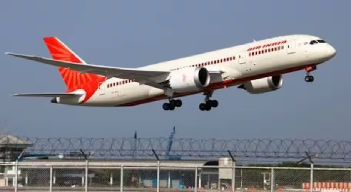

An Air India international flight from Frankfurt to New Delhi was forced to make an emergency landing at Jaipur International Airport on Wednesday morning after the pilot transmitted a hijacking alert. According to Directorate General of Civil Aviation (DGCA) sources, the Boeing 787-9 aircraft landed safely and was immediately escorted to an isolation bay for comprehensive security screening.
Flight AI 2030 was en route to New Delhi when the Pilot-in-Command (PIC) activated transponder code 7500—the universally recognized emergency squawk signal for hijacking or unlawful interference.
Air Traffic Control (ATC) immediately initiated emergency protocols upon receiving the alert, directing the aircraft away from Indira Gandhi International Airport in Delhi and routing it to Jaipur. Following the landing, authorities cleared the aircraft after extensive multi-agency sweeps, with passengers cleared to resume their journey.
Security sweeps conducted amid conflicting bomb threat reports
While DGCA officials confirmed the hijacking squawk code, local police authorities indicated the emergency response followed a reported bomb threat on board. Assistant Commissioner of Police (Malviya Nagar) Shiv Dayal confirmed that airport officials alerted law enforcement to prepare for an emergency landing following the threat notification.
Security protocol execution involved multiple elite tactical and inspection units:
Deplaning and screening: Passengers and flight crew were deboarded in phased intervals under strict security supervision, with all carry-on and checked baggage subjected to secondary screening.
On-ground operations: Ground units from the Anti-Terrorism Squad (ATS), local Rajasthan Police, and airport security teams conducted a complete inspection of the cabin and cargo holds.
National response: The National Security Guard (NSG) counter-terrorism unit was placed on high standby in New Delhi as a precautionary measure.
The DGCA has launched a formal investigation to determine whether the transponder signal was triggered by a technical malfunction, human error, or an active security threat. Air India has not yet issued an official statement regarding the incident.