
Hundreds of high schools across France will be fully or partially closed on Monday, the government said, as weeks of student demonstrations that have turned increasingly violent look set to resume this week. Education Minister Edouard Geffray announced the step on Sunday, describing it as a safety measure. He said between 400 and 500 schools would suspend classes in whole or in part because the security conditions needed to keep them open were not in place.
The government says it is aiming for a gradual, partial return to normal teaching.
The scale is similar to last Friday, when the education ministry said at least 400 of the country’s roughly 3,700 high schools were shut, with a further 560 facing protests or disruption.
How the movement began
The unrest started on 17 September at a high school in a Paris suburb, where teachers and students mobilised over a shortage of teaching staff and school days they considered too long. Complaints about class sizes have also featured.
What began as a local protest has since spread across the country, bringing class walkouts, blockades and street marches.
Violence and arrests
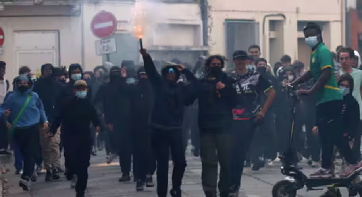
Geffray said that since the demonstrations erupted in mid-September, at least 170 students and 78 school staff have been injured, and 24 schools have been burned or ransacked. The interior minister has said more than 5,000 people were arrested over the past week, about 85 percent of them minors.
The government has blamed outside agitators. In a radio interview, Geffray said far-left activists had infiltrated the student movement, taken control of it and pushed it toward extreme violence.
Critics see the response differently. Opponents of the crackdown have called the police tactics disproportionate, and Amnesty International has said the young protesters should be heard rather than repressed.
The weekend brought a pause in the unrest, but organisers have called for large-scale demonstrations to resume on Tuesday. They say President Emmanuel Macron’s government has offered no concrete measures to address their demands. With closures continuing and both sides holding firm, the standoff shows no clear route to resolution.