
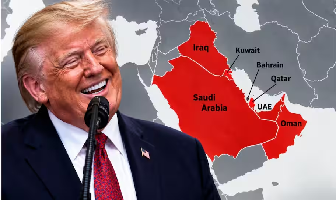

The US has sent two additional Patriot missile batteries to Saudi Arabia and Qatar, reinforcing key oil and gas facilities with the high-tech mobile air defence system as President Donald Trump considers renewed military action against Iran. The deployment comes as Gulf governments seek stronger protection for energy sites that could face Iranian retaliation if another round of US strikes begins, Axios reported on Friday.
The deployment comes after the United States completed the withdrawal of its military forces from Iraq. US officials have said the additional missile batteries are intended to help protect key allies and critical energy infrastructure in the Gulf.
Patriot batteries assigned to Gulf energy sites
Axios, citing two US officials and a regional source, said one Patriot battery was sent to Saudi Arabia to protect a major oil facility and another was deployed to Qatar to defend a natural gas installation. The report said Saudi and Qatari leaders had pressed Trump in August against attacks on Iranian energy sites because they feared Tehran could answer by striking their own oil and gas infrastructure.
The deployment comes at a sensitive time for Gulf energy flows. As per news reports, Saudi Arabia had restarted operations on its East-West Pipeline and resumed tanker loadings at Yanbu after an earlier drone strike forced a shutdown. The pipeline gives Saudi Arabia an export route to the Red Sea that avoids the Strait of Hormuz.
Qatar depends heavily on Hormuz for liquefied natural gas exports. As per news reports, LNG shipments through the strait in September reached their highest monthly level since the current conflict began, with 19 shipments recorded by S&P Global Energy and 21 by Kpler. Qatar accounted for most of those cargoes.
US expands military presence as Iran prepares wider response
The Patriot deployments form part of a broader US military build-up. As per news reports, Washington is sending the USS Theodore Roosevelt carrier strike group, the USS Makin Island Amphibious Ready Group and about 9,000 additional personnel towards the Middle East. The Makin Island group carries thousands of Marines and sailors.
According to another news report, Iran is preparing a broader response if the US resumes large-scale attacks. Iranian officials have also continued diplomatic contacts through regional mediators. Military preparations and talks are now unfolding at the same time, with Gulf bases, energy installations and shipping routes central to planning on both sides.
Patriot stocks face pressure after months of use
The extra deployments also draw on a weapons system that has been used heavily during the Iran conflict. A July assessment by the Center for Strategic and International Studies estimated that US Patriot interceptor stocks had fallen below 1,000 after months of air-defence operations. CSIS said the reduced inventory could force US forces to take more risk when deciding which incoming threats to intercept.
The US Army awarded Lockheed Martin a $4.7 billion contract action in April to speed up production of PAC-3 MSE interceptors. The Army says the missile uses hit-to-kill technology and is designed to defeat tactical ballistic missiles, cruise missiles and aircraft. The Patriot system combines radar, an engagement control station and launchers to protect troops and fixed sites from airborne attack.