
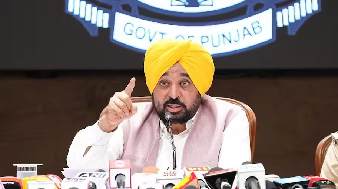

Under the leadership of Chief Minister Bhagwant Singh Mann, Punjab’s ‘Yudh Nashean Virudh’ (war against drugs) has evolved past traditional police crackdowns. It now employs an integrated five-pillar model uniting law enforcement, educators, community volunteers, youth leaders, and healthcare professionals to dismantle supply chains, stop addiction early, improve reporting, and streamline recovery.
The initiative operates on the principle that the drug crisis cannot be solved by police stations alone. By taking the fight directly into villages, educational institutions, communities, and medical facilities, the strategy achieves four core goals:
Making drug distribution harder
Simplifying the process of reporting peddlers
Shielding youth from early-stage addiction
Facilitating accessible treatment for those in recovery
1. Police action: breaking the supply chain
Law enforcement acts as the backbone of the campaign. Between March 2025 and September 2026, the Anti-Narcotics Task Force (ANTF) registered 61,824 FIRs and made 81,433 arrests.
Significant recoveries during this timeframe include:
3,918 kg of heroin
991 kg of opium
47 tons of poppy husk
1,416 kg of ganja
6.5 million tablets and capsules
Additionally, the Punjab Police conducted 79,293 public meetings to drive community participation.
2. Teachers: stopping addiction at the roots
Prevention begins well before substance abuse takes hold. A dedicated 14-week anti-drug curriculum is currently taught to 7.5 lakh students across 3,600 schools by specially trained educators.
High-school and senior-secondary teachers are undergoing phased training to spot early signs of mental distress, vulnerability, and intervention methods. Phase one targets 25,000 teachers across 13 districts, with 7,000 already trained in Amritsar, Tarn Taran, and Fazilka.
3. Youth & peer networks: transforming social norms
Peer influence and social acceptance are major hurdles in combating abuse. The initiative utilizes peer engagement, testimonials from recovered individuals, and youth-led initiatives in schools and colleges to destigmatize recovery and make drug refusal easier.
Schools follow year-round activity calendars, while colleges host cultural festivals, mental health clubs, and sporting events to promote healthy lifestyles and offer viable alternatives.
4. Community vigilance: grassroots action
Active citizen participation forms a powerful local defense network. By September 2026, roughly 1.25 lakh members joined nearly 15,000 Village and Ward Defence Committees (VDCs).
Over 50,000 VDC members have been trained to use the Nasha Mukti App.
The Safe Punjab WhatsApp Helpline (97791-00200), launched on March 1, 2025, has received over 51,000 tip-offs, leading to more than 25,000 drug-related arrests.
5. Health and rehabilitation: pathways to recovery
Recognizing that enforcement alone is insufficient, Punjab has heavily scaled up its medical infrastructure. The state currently features 547 OOAT centres, 219 de-addiction centres, and 91 rehabilitation centres.
Refurbished facilities, trained medical workers, and creative/skilling activities have greatly encouraged institutional care:
Admissions to government de-addiction and rehabilitation facilities jumped by over 170%, rising from 12,200 in 2024 to nearly 34,000 in 2025.