
Aishwaria Sonavane
A US drone company, Powerus, signed a memorandum of understanding (MoU) with the Pakistan Army that includes an initial, undisclosed order for unmanned aerial systems. Powerus co-founder Brett Velicovich confirmed the deal, but refused the disclosure of details pertaining to the technology or its value, citing security-related sensitivities. Powerus, according to reports, is due to merge with Aureus Greenway Holdings, which is backed by US President Donald Trump’s two sons. The merger is expected to be completed by October.
The current deal, despite the limited information, brings to light a few thoughts – including how Washington’s private sector, closely linked to US President Donald Trump’s family, is occupying the space vacated by cold state-to-state aid and defence ties, how Trump’s family business interests are increasingly intertwined in ties with Pakistan, and how little any of these developments have historically translated into reliable, long-term strategic gains for Pakistan.
American military aid to Pakistan has remained suspended since January 2018, during Trump’s first term, but a commercial arms sale is separate from this arrangement. The suspension essentially concerns the US government assistance, including Foreign Military Financing and Coalition Support Fund reimbursements, such as grant assistance and counter-terrorism reimbursements. However, these measures do not prohibit American defence companies from selling military technology to Pakistan. US defence exports are generally channelled through two avenues – Foreign Military Sales (FMS), through which the US government facilitates sales to foreign governments, and Direct Commercial Sales (DCS), which allow foreign governments or entities to purchase defence services from American private companies directly; DCS transactions, however, remain subject to US export-control requirements and relevant licensing. On the Pakistani side, the Directorate General Defence Purchase (DGDP), under the Ministry of Defence Production, oversees defence procurement policy, contracting, and the acquisition of defence equipment. While the deal falls within the existing legal framework, the more consequential details, such as the specific authorisations of the drones, the quality, and value of the initial order, remain undisclosed.
On Again, Off Again
The current private defence deal comes in the context of a long, tumultuous relationship between Washington and Islamabad, which has traditionally remained centered on security engagements.
The first major institutionalisation came in 1954, when the US and Pakistan signed the Mutual Defense Assistance Agreement, which involved defence equipment and military training for Pakistan. Subsequently, Islamabad – quite reluctantly – became part of the US-backed regional security bloc and a crucial recipient of American aid.
The transactional relationship, despite its current warmth, has fundamentally been marred by deep institutional mistrust and frustration. Both countries have often sought different things from the partnership – Islamabad has wanted a more assertive posture against India from the US, and Washington has sought to align Pakistan’s security policies with its own.
Despite the lowest point of ties in 2018, and after the ouster of NATO forces from Afghanistan in 2021, military-to-military contact did not entirely end. In December 2025, Washington approved a USD 686 million package for Pakistan’s existing F-16 fleet, covering Link-16 systems, cryptographic equipment, avionics, training, and logistical support. This was designed to keep the US-made aircraft operational and interoperable.
Even as Trump has exalted Pakistan Army Chief Asim Munir as his “favourite Field Marshal” for his mediation role between the US and Iran in the ongoing West Asian conflict, the security relationship continues to be narrow, selective, and conditional.
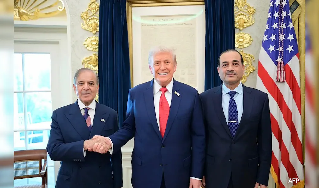
Nevertheless, the optics of this deal deserve greater attention, given the reported involvement of Trump’s sons through an investment fund in the company. This development demonstrates a larger pattern in the nature of US-Pakistan ties, in which diplomacy, personal rapport, and private capital are closely linked. This was also seen in the cryptocurrency deal in January 2026, when the Pakistani government signed an MoU with an American company affiliated with World Liberty Financial, the Trump family’s crypto venture. Given Pakistan’s growing role in West Asia, the deal seems consistent with Pakistan’s historic strategy of keeping itself relevant to Washington, largely through its rentier-state model. The idea is to deliver enough to remain indispensable to the US, while the military establishment consolidates more power at home.
Pak’s Drone Capabilities
Given the May 2025 conflict with India, where the use of unmanned aerial vehicles (UAVs) became a key feature of this conflict, this deal could have implications for Pakistan’s defence industry and drone capabilities.
Pakistan’s defence industry has already established a sustained UAV ecosystem. The state-linked defence company Global Industrial & Defence Solutions (GIDS) publicises the Shahpar-II and Shahpar-III UCAVs alongside smaller tactical UAVs, loitering munitions, surveillance payloads, and anti-drone systems. The Shahpar-II Block-II is marketed as a MALE armed UAV with autonomous flight, redundant datalinks, and a 120-kg external payload capacity.
Pakistan has primarily relied on China and Turkey, its two biggest defence markets, for drone technology. Pakistan’s inventory currently includes Bayraktar TB2, Akinci, and Chinese Wing Loong II, alongside indigenous platforms. Thus, its recent deal with the American company, which reportedly involves a “joint technology relationship”, could potentially expand Pakistan’s indigenous capabilities.
As of now, it remains unclear whether Pakistan has security-licensed production of the Powerus systems; the MoU does not constitute an established joint production line. Should local manufacturing materialise, Pakistan could gain credible exposure to integrating technology, foreign sensors, communications, and mission systems, in addition to its existing drone ecosystem. Overall, this also suggests Pakistan’s efforts to diversify technological architecture.
For India, the immediate military significance of this development would become clearer with time. An expansion of the MoU to licensed production, technology transfer, and a boost to indigenous design would note a consequential push in Pakistan’s defence-industry complex.
That said, the history of the US-Pakistan relationship over the last seven decades offers useful insight. These ties have deepened when Washington has needed Islamabad and receded dramatically when American priorities shifted.