
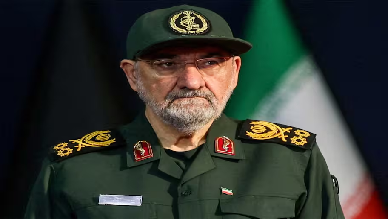

Iran has conveyed seven conditions to the United States through Qatar for resuming negotiations to end the ongoing war, while Supreme National Security Council Secretary Mohsen Rezaei warned that Tehran is prepared for a “decisive war” if Washington rejects its demands.
He said Qatar has passed Iran’s conditions to the United States and that Tehran is now waiting for President Donald Trump’s response. He made the claims in an interview with Al Jazeera as regional mediators stepped up efforts to revive diplomacy between the two countries.
“We remain in contact with the mediator Qatar, which has conveyed our conditions to Washington with the aim of ending the war. We are awaiting President Trump’s response,” Rezaei said.
Iran has publicly disclosed three of the seven conditions. It wants the war to end on all fronts, Iranian funds frozen abroad to be released and the US naval blockade to be lifted.
“Our conditions are an end to the war on all fronts, the release of our frozen funds and an end to the naval blockade,” he said.
In a separate post on X, he said Iran has set seven conditions for opening negotiations with Washington and described Tehran’s position as clear.
“Iran has announced 7 conditions for starting any negotiations to the US government. Tehran’s message is clear and unambiguous: if Washington wants to escape the quagmire it has created for itself and avoid getting further entangled in it, it has no choice but to accept Iran’s rights and conditions,” he wrote.
He also issued a direct warning to Trump.
“It is in Washington’s interest to accept these conditions. Trump’s threats will not achieve any results. We are prepared for a decisive war,” he said.
Qatar, Pakistan push for talks
Qatar and Pakistan have been working to revive negotiations between Iran and the United States after a memorandum of understanding (MoU) between the two sides expired last month. The earlier understanding was intended to create a path towards a full settlement, but disagreements over its implementation prevented the process from producing a lasting agreement.
Islamabad has played a role in the mediation effort for months. Its Interior Minister Mohsin Naqvi has previously travelled to Tehran for talks with Iranian officials, while Pakistan Army chief Field Marshal Asim Munir has also held talks with Iranian leaders. In August, Naqvi said Pakistan and Iran had made progress in talks aimed at reducing the confrontation and reopening the Strait of Hormuz.
The diplomatic effort is taking place as Trump considers his next move in the war. He told Axios earlier this week that he was approaching a major decision on whether to resume large-scale military operations against Iran. He also said Washington is in contact with Tehran, and he wants to consult leaders of Gulf states during the UN General Assembly meetings in New York.
Iran prepares for another US strike
Rezaei said Tehran’s military assessment includes the possibility of another American attack. He described another US strike as “very much on the cards” and said Iran’s military planning has changed after two earlier rounds of fighting.
He said Iranian planning now includes US naval assets operating from the Gulf through the Gulf of Oman and into the Arabian Sea. He also claimed that Iran has recently test-fired a multi-warhead anti-ship missile near a US vessel or aircraft carrier.
He warned that any new Iranian response could extend beyond US military positions in the region. According to him, American bases as well as US commercial interests and companies operating in the region could become targets.
Asked whether the war could end soon, Rezaei said, “In practical terms, the war is still going on,” while adding that Tehran is pursuing a strategy aimed at ending the conflict “as soon as possible”.
Nuclear programme and Strait of Hormuz
Rezaei also addressed Iran’s nuclear policy. He said Tehran has not decided to withdraw from the Nuclear Non-Proliferation Treaty, although he warned that US actions could push Iran towards such a decision.
He said Iran’s nuclear doctrine has not changed, and Tehran continues to follow a religious decree prohibiting the development of nuclear weapons.
Rezaei also rejected reports that Iran could close the Bab al-Mandeb Strait, describing control of the waterway as “a Yemeni matter”.
The Strait of Hormuz is a separate issue in Tehran’s talks with regional countries. He said Iran and Oman have come close to announcing an agreement before the plan was shelved. He said the proposal is still in place but can require support from other regional countries before it is made public.
The issue has become more urgent as maritime traffic through the Gulf is affected by the war. The US military has continued efforts to facilitate oil movement through the Strait, while regional governments have pursued their own measures to protect shipping.
China has also called for diplomacy. Chinese Foreign Minister Wang Yi urged Iran and the Unite States this week to exercise restraint and return to the interim agreement reached in June. Beijing has also called for the reopening of the Strait of Hormuz, an important route for global energy supplies.
Iranian leaders cleared for UN visit
The diplomatic activity comes ahead of the UN General Assembly’s High-Level Week in New York, where the United States has approved visas for a core Iranian delegation, including President Masoud Pezeshkian and Foreign Minister Abbas Araghchi.
The US State Department said the decision is consistent with Washington’s obligations as host country under the UN headquarters agreement. The Iranian delegation will be smaller than in previous years and will face restrictions on its movement and purchases. Pezeshkian is scheduled to address the General Assembly during the high-level meetings.
The approval gives Iranian and American officials another international setting for diplomatic contact at a time when Qatar and Pakistan are trying to reopen a negotiation channel between Washington and Tehran.