
Pakistan Prime Minister Shehbaz Sharif has a message for the Shanghai Cooperation Organisation- condemn terrorism, respect international treaties and never weaponise water. On paper, it sounds like a textbook appeal for peace. But for India, the words carry a rather different ring.
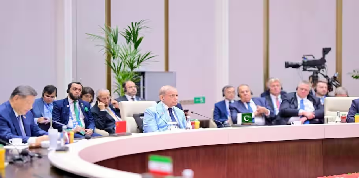
Prime Minister Sharif on Tuesday addressing the SCO Council of Heads of State meeting in Bishkek, said Pakistan had made “immense sacrifices” in the fight against terrorism.
He also declared that terrorism must be condemned “in all its forms and manifestations” and argued that shared water resources should never be weaponised.
The timing could hardly be more striking. The safe harbor of terrorists preaching peace at an international forum.
‘No room for double standards’
At the same summit, Prime Minister Narendra Modi delivered a pointed message that appeared to strike at the heart of Pakistan’s long-standing terrorism narrative.
PM Modi said there could be “no room for double standards” and called for the dismantling of the entire terror ecosystem, including financing, recruitment, radicalisation and safe havens.
His message was blunt – countries that use terrorism as a tool of policy and provide shelter and support to terrorists must be told that terrorism cannot be a “strategic asset”.
Pakistan’s claim of being merely a victim of terrorism has long collided with a record involving groups that have operated from its soil and targeted India.
The United Nations Security Council identifies Lashkar-e-Taiba (LeT) as a Pakistan-based terrorist organisation and says it has conducted numerous attacks, including the November 2008 Mumbai attacks. The UN also links LeT to the 2001 Parliament attack and other attacks in India, the most recent being the April 2025, Pahalgam terror attack.
The Mumbai attacks remain one of the most painful examples. In November 2008, 10 terrorists carried out a coordinated assault across Mumbai, killing more than 150 people.
The UN has specifically identified LeT’s role in the attacks.
Then came another reminder of the Pakistan-based terror network: the December 2001 attack on India’s Parliament. Both LeT and Jaish-e-Mohammed were implicated in the attack, in which nine people were killed and 18 injured.
India’s own official record has repeatedly described JeM as a Pakistan-based organisation. After the 2019 Pulwama suicide bombing, which killed 40 CRPF personnel, India’s Foreign Secretary said JeM was based in Pakistan and had been responsible for a series of attacks, including the Parliament attack and the Pathankot airbase attack.
India also said Pakistan had been provided information about terrorist training camps but denied their existence.
So when Islamabad talks about the “fight against terrorism”, a simple question should be answered first – fight against whom, and from where?
The breeding ground for terroirst preaching peace
The contradiction becomes even sharper when the story of Osama bin Laden enters the picture.
The world’s most wanted terrorist was not discovered in some remote battlefield. He was found in Abbottabad, Pakistan, in 2011, living in a large compound in an affluent area.
The US government said its intelligence had located bin Laden there before American forces carried out the raid that killed him.
Even Pakistan’s own government acknowledged that the US operation in Abbottabad had resulted in bin Laden’s death.
Its Foreign Ministry described the operation and the questions it raised over how the Al-Qaeda chief had been living inside Pakistan.
That episode became a global symbol of the safe-haven problem.
Following bin Laden’s killing, then Union Home Minister P Chidambaram said the discovery of the Al-Qaeda chief “deep inside Pakistan” reinforced India’s concern that terrorists from different organisations were finding sanctuary there.
He also specifically raised concerns about the handlers of the Mumbai attackers being sheltered in Pakistan.
Pakistan, of course, has itself suffered terribly from terrorism it has harbored for years.
Thousands of Pakistani civilians and security personnel have been killed in terrorist attacks. Pakistan’s government has repeatedly pointed to these sacrifices while defending its counter-terrorism credentials.
But that is precisely where the debate becomes complicated.
A country can be both a victim of terrorism and a place where terror groups operate. Pakistan’s own suffering does not erase the international record surrounding organisations such as LeT and JeM.
The UN’s sanctions records continue to identify JeM as based in Pakistan, while describing its links to attacks and extremist networks.
Against that backdrop, Sharif’s SCO appeal for terrorism to be condemned “in all its forms and manifestations” sounds less like a new doctrine and more like a sentence demanding scrutiny.
The Indus Waters treaty in the picture
While PM Sharif highlighted Pakistan’s “immense sacrifices” and warned against weaponising water, Modi focused on the machinery that keeps terrorism alive: money, recruitment, radicalisation and safe havens.
That distinction matters because India has consistently argued that terrorism cannot be separated from the infrastructure that enables it.
And then there is the water issue.
Sharif said shared waters must never be weaponised and that binding treaties must be honoured “in letter and spirit”.
India, meanwhile, sharply stated position on the Indus Waters Treaty and Pakistan’s conduct. For New Delhi, terrorism and water cannot simply be placed into separate diplomatic boxes when Islamabad continues to sponser cross-border terrorism.
The irony of the SCO stage is therefore difficult to miss.
Pakistan wants to project itself as a responsible regional power taking charge of the organisation under the theme “Turning Vision into Action: Connectivity, Innovation and Shared Prosperity.”
India, meanwhile, is asking the organisation to confront the hard security realities standing in the way of that prosperity.
Because roads, trade corridors and digital connectivity mean little when terrorism continues to threaten regional security.
Pakistan’s bluff at international forums
The SCO brings together 10 member states, including India, Pakistan, China, Russia and Iran. With more than three billion people represented, it is hardly a forum where terrorism can be reduced to diplomatic soundbites.
Sharif may want the world to remember Pakistan’s sacrifices.
India wants the world to remember the victims of terrorism, from Parliament to Mumbai, from Pulwama to Pathankot and the networks that made those attacks possible.
That is why Modi’s warning about terrorism not being anyone’s “strategic asset” hits particularly hard.
For India, the question is not whether Pakistan has suffered from terrorism. It has.
The question is whether Islamabad is prepared to confront every terrorist organisation, every financier, every recruiter, every radicaliser and every safe haven, even when doing so becomes politically uncomfortable.
Until that question gets a convincing answer, Pakistan’s peace sermons at international summits sound more like bluff and face one stubborn problem: India remembers the record behind the rhetoric.