
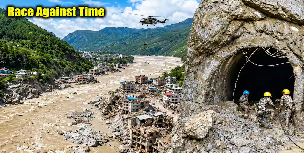

Nepal is experiencing a humanitarian crisis as the death toll due to massive flash floods continues to rise, claiming over 600 lives, with about 2,500 people reported missing. Resulting from a massive glacial collapse at high altitude and a huge landslide in the mountains, the torrents have isolated remote villages, wiped out many bridges, and trapped hundreds of workers in hydroelectric plants.
Rescue operation under immense pressure, disaster management bodies continue to be on high alert due to the formation of an unstable temporary lake in the river corridor of Bhote Koshi.
Rising human toll and unaccounted-for Indian nationals
The crisis, having far-reaching effects, has also resulted in the disappearance of several hundred foreign nationals and tourists in remote Himalayan valleys.
Missing nationals: The External Affairs Department has identified about 320 missing Indian citizens and 100 people of Indian origin who are missing.
Hydropower plant sites hit hard: Several hundreds of missing persons are from sites like the Upper Trishuli-1 hydroelectric plant, which faced the brunt of the slurry wave, especially tunnel structures and worker camps.
Evacuation successful: Rescue teams were able to make contact with about 400 Indians safely located in Tibet, and nearly 100 who were stranded in the vicinity of the border have returned safely to Nepal.
The risk posed by the upstream temporary lakes and river status
Despite stable water flow at Bhote Koshi and Trishuli river levels at present, hydrologists warn that the danger of the crisis is far from over.
Debris barrier formation: The initial collapse of the mountains blocked narrow channels of the rivers with millions of tons of stones, ice, and mud, thus forming a natural dam.
Water accumulation: The satellite images show that the upstream temporary lake has accumulated over 2 million cubic meters of water, with projections estimating another 3 million cubic meters of inflow.
Dam burst danger: If the water pressure bursts the natural debris dam, there will be a sudden secondary flash flood wave downstream without any prior notice.
Relief and emergency rescue operations and infrastructure repairs
As over 36 bridges are washed away in the crisis, rescue operations require vast logistics support to reach the isolated mountain communities.
International help: Nepal has officially requested assistance of 42 prefabricated Bailey bridges from India and China for restoring land links.
Deploys security personnel: Over 7,400 security personnel, including nearly 2,400 elite army troops, are combing through debris fields and flooded tunnels in search of survivors.
As relief shipments arrive from neighboring partners, the primary race remains stabilizing high-altitude drainage risks before weather patterns trigger further instability across the fragile Himalayan terrain.