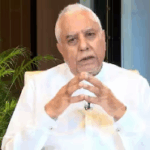
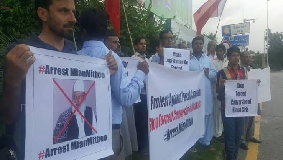

Just days after Pakistan President Asif Ali Zardari claimed that Muslims in his country “tolerate” the Hindu minority and that they are “as free as anywhere else”, Islamabad has been left red-faced by a sharp counter-narrative from a high-profile watchdog. Dr Asif Mahmood, a Pakistani-origin commissioner at the United States Commission on International Religious Freedom (USCIRF), has publicly taken Pakistan to task over severe religious persecution, putting the spotlight directly on the systemic abduction and forced conversion of minor Hindu girls. The scathing rebuke from a prominent Pakistani-American official directly undermines Islamabad’s state rhetoric, leaving foreign policy officials struggling to defend their minority rights record on the global stage.
Mahmood puts Hindu girls at the centre
Mahmood said his record on Pakistan is clear and that he has spoken out repeatedly about religious freedom concerns. He said the issue has been raised by the United States Commission on International Religious Freedom and by him personally.
His strongest warning focused on Hindu girls. “Not one time, not two times, multiple times and calling for action on that obviously, on Christians and Sikhs and Ahmadiyya. But specifically my focus of attention is Hindu girls who they are trying to do convert and play that game and that is very concerning,” he said.
He added, “Specifically my focus of attention is Hindu girls who they are trying to do convert and play that game and that is very concerning.”
The remarks put the treatment of Hindu girls at the centre of Mahmood’s criticism. At the same time, he made clear that his concerns extend across several minority communities in Pakistan.
Pakistan faces continued US religious freedom pressure
Mahmood also pointed to the wider pressure on Pakistan from USCIRF. He said the commission has repeatedly raised concerns about religious freedom in Pakistan and has done so when Pakistani officials visit the United States.
“My record has been very clear, calling out Pakistan, calling out China. We had a hearing on China. We keep on raising issues whenever they have visited America, or whenever they will visit, we will bring it up,” Mahmood said.
He added that Pakistan has been called out by USCIRF many times. “On Pakistan we have raised this multiple times, multiple times on record,” he said.
What the CPC status means
The dispute also connects to USCIRF’s recommendation that Pakistan be designated a Country of Particular Concern, or CPC. The US designation applies to governments that engage in or tolerate particularly severe violations of religious freedom.
Mahmood said both Pakistan and China have been recommended for CPC status by USCIRF. He also said Pakistan has been on the CPC list for a long time and that it took time for the US State Department to accept the commission’s recommendation.
“China and Pakistan have also been recommended to be CPC, and Pakistan has been on CPC for a long time. I think it took a long time for the State Department to actually accept our recommendation,” he said.
Why Mahmood’s criticism matters
Mahmood’s remarks carry added weight because he is of Pakistani origin while serving on a US body focused on religious freedom. His repeated focus on Hindu girls, along with Christians, Sikhs and Ahmadiyya Muslims, keeps minority rights firmly in the discussion around Pakistan.
For Islamabad, the comments add to continued scrutiny over religious freedom and minority rights. For Washington, they underline an issue that can remain part of US engagement with Pakistan, especially when questions about the treatment of religious minorities arise.