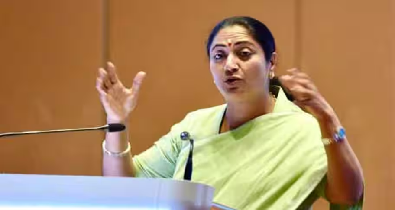

Amid a rise in influenza cases in the national capital, Delhi Chief Minister Rekha Gupta called for an emergency review meeting on Tuesday, prompting the government to issue fresh advisories aimed at schools and health institutions to tackle the spread of H1N1 and other seasonal illnesses.
Briefing reporters after the review meeting, Delhi Health Minister Pankaj Kumar Singh said the national capital has recorded around 3,000 influenza cases so far this year, of which 2,308 were confirmed H1N1 infections.
He clarified that H1N1 cases account for the vast majority of the city’s overall influenza count, with the remaining cases attributed to other strains of the virus.
H1N1 infection, more commonly known as swine flu, typically presents with fever, cough, sore throat, headache, body aches and fatigue.
“Situation Under Control”: Health Minister
Singh sought to assure residents that the health infrastructure remained well-equipped to handle the rise in cases. “There is no problem of doctors, staff or medicines. The chief minister has called an emergency review meeting.
I assure you there is no problem, everything is under control,” he said.
The minister added that the review meeting, held with senior officials from the Health Department, the Municipal Corporation of Delhi (MCD), the New Delhi Municipal Council (NDMC) and the Delhi Cantonment Board, was convened specifically to assess the city’s preparedness and arrangements for tackling H1N1, seasonal influenza, and vector-borne diseases.
Advisory for schools
As part of the response, the Delhi government has issued an advisory directing schools to step up precautionary measures.
Schools have been asked to spread awareness among students about flu symptoms and preventive practices, encourage hygiene habits such as regular handwashing, and ensure that children showing symptoms of illness are not sent to school until they recover.
Focus on vector-borne diseases too
Beyond H1N1, the review meeting also addressed the city’s preparedness for vector-borne diseases such as dengue and chikungunya, which typically see a rise during the monsoon and post-monsoon months.
Authorities are expected to intensify inspections for mosquito breeding sites, including stagnant water in coolers, flower pots and other areas prone to water accumulation.
With the emergency meeting aimed at reviewing hospital preparedness, medicine stock, and manpower availability, the Delhi government has sought to reassure residents that the rising case numbers do not indicate a crisis, even as authorities continue to monitor the situation closely across the city.