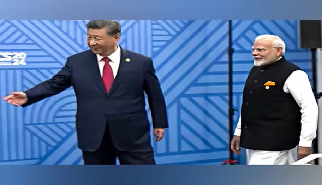

Chinese President Xi Jinping is expected to visit New Delhi in September for the BRICS Summit, which will be held on September 12 and 13. If confirmed, it will be his first visit to India in seven years and his first trip since the 2020 Galwan Valley clash led to a deterioration in ties between the two countries.
Citing three sources, Reuters said Xi is expected to attend the summit with a large delegation. Two Indian sources quoted in the report said the delegation could include around 400 officials, twice the size of the team that accompanied the Chinese premier during his 2019 visit to India.
The visit comes as New Delhi and Beijing have stepped up diplomatic talks in recent months. National Security Adviser Ajit Doval is in China for the latest round of talks on the boundary dispute, while preparations for Xi’s possible visit are also understood to be under way.
An Indian source said Chinese officials are working on hotel arrangements and security protocols for the visit.
What China said about Xi’s India visit
Beijing has not officially confirmed the president’s travel plans. China’s Foreign Ministry said Beijing has always given priority to BRICS and has taken an active part in its activities.
“We have always given great importance to BRICS cooperation and actively participated in relevant activities. We also support India in hosting this year’s BRICS summit and wish India success,” the Chinese side said.
The ministry also said it had no information about Xi’s visit that it could provide at present.
India has not officially announced Xi’s visit either. However, his participation could lead to a bilateral meeting with Prime Minister Narendra Modi on the sidelines of the summit. Such a meeting could provide an opportunity for the two leaders to discuss the next steps in India-China relations.
PM Modi and President Xi met in August last year on the sidelines of the Shanghai Cooperation Organisation (SCO) summit in Tianjin.
Why Doval’s China visit is important
The NSA’s visit to Beijing comes at an important point in the India-China relationship. He and Chinese Foreign Minister Wang Yi are the designated special representatives for the boundary talks. They are scheduled to take part in the 25th round of the Special Representatives’ dialogue on the border issue on Tuesday (August 25).
The mechanism was created in 2003 to work towards a settlement of the complicated India-China boundary dispute. The two countries share a land border of around 3,488 km, although the boundary is disputed and not fully demarcated. The talks have not produced a final settlement, but the process has provided a channel for the two sides to discuss border-related tensions.
Foreign affairs expert Wale Avvad said Doval’s visit has two important purposes – talks on the boundary dispute and an invitation to President Xi Jinping to attend the BRICS summit.
“India’s recent steps show its willingness to maintain stable relations with China,” he said, adding that this is important for improving trust between the two major Asian powers.
He also said the two countries may continue to have differences even as they work towards more stable relations.
Galwan clash brought ties to a low point
The India-China relationship suffered a major setback after the Galwan Valley clash in eastern Ladakh in June 2020. Twenty Indian soldiers were killed in the clash. The incident led to a prolonged military stand-off along the Line of Actual Control (LAC) and affected trade, investment and people-to-people ties.
India subsequently tightened scrutiny of Chinese investments and introduced several measures affecting Chinese companies and digital services.
The two sides have since held multiple rounds of military and diplomatic talks. Their efforts have included disengagement at some friction points and talks aimed at maintaining peace along the border.
External Affairs Minister S Jaishankar said on Saturday (August 22) that peace and stability in the border areas are essential for better relations with China.
“I think we saw a very difficult period between the summer of 2020 and the autumn of 2024, and that was mainly a result of the situation in the border areas,” he said.
“Ultimately, peace and stability in the border areas are necessary for good relations, and the border situation will largely determine the state of the relationship,” he added.
Arunachal is a flashpoint
The relationship also witnessed tension over China’s decision to assign its own names to places in Arunachal Pradesh. New Delhi rejected Beijing’s objections after India formally recognised the standard names of 27 places and geographical features in the state.
India has repeatedly stated that Arunachal Pradesh is an “inalienable and integral” part of the country and that no action by another country can change this position.
President Xi did not attend the 2025 BRICS summit in Brazil. His possible presence at the September summit in New Delhi would therefore carry diplomatic importance, particularly as India seeks to manage its relationship with China while continuing talks on the unresolved boundary issue.